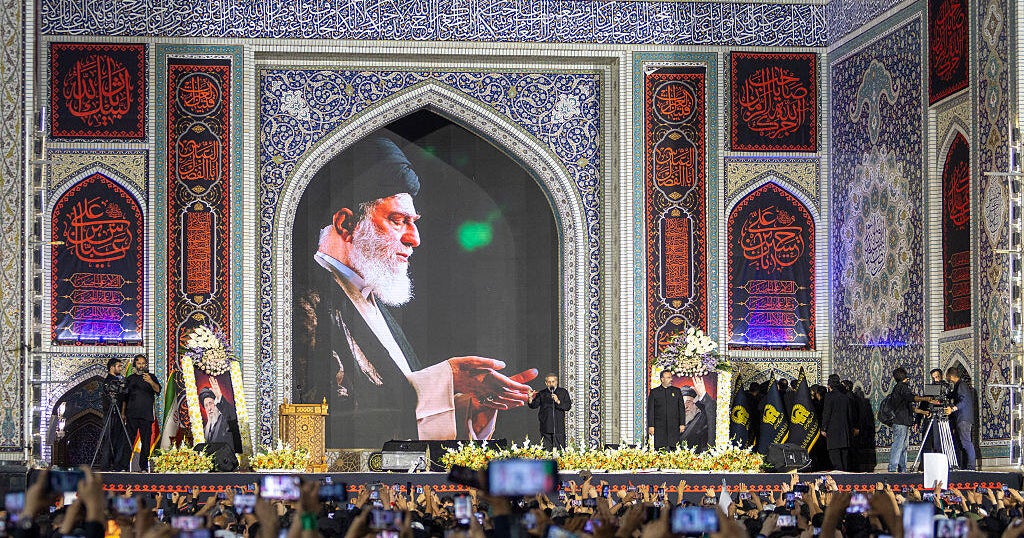
The funeral of Iran's former Supreme Leader Ali Khamenei has sparked a significant escalation in the ongoing conflict between Iran and the United States. As the world watches with bated breath, the two nations have ramped up their tit-for-tat strikes, marking a disturbing turn of events in the already volatile region. This development comes on the 132nd day of the war, with no signs of a peaceful resolution in sight.
Background of the Conflict
The conflict between Iran and the US has been simmering for years, with tensions escalating significantly over the past few months. The dispute has its roots in a complex web of political, economic, and strategic interests, with both nations vying for dominance in the region. The situation took a turn for the worse with the death of Supreme Leader Ali Khamenei, who was laid to rest amid an outpouring of grief from his supporters.
Khamenei's Funeral and Its Aftermath
The funeral of Ali Khamenei was attended by thousands of mourners, who gathered to pay their respects to the former Supreme Leader. However, the solemn occasion was marred by an exchange of fire between Iranian and US forces, marking a significant escalation in the conflict. The tit-for-tat strikes have raised concerns about the potential for a full-blown war, with far-reaching consequences for the region and the world at large.
The US has been conducting airstrikes against Iranian targets, citing concerns over national security and the need to protect its interests in the region. Iran, on the other hand, has retaliated with missile strikes against US bases and personnel, vowing to defend its sovereignty and territorial integrity. The situation is precarious, with both sides dug in and refusing to back down.
Global Implications of the Conflict
The escalating conflict between Iran and the US has significant implications for global security and stability. The region is already volatile, with multiple conflicts and flashpoints that could ignite at any moment. The involvement of two major world powers has raised the stakes, with the potential for a wider conflict that could draw in other nations and alliances.
The global community is watching the situation with concern, with many nations calling for restraint and a peaceful resolution to the conflict. The United Nations has issued a statement urging both sides to exercise caution and avoid actions that could escalate the situation further. However, with tensions running high and emotions raw, it remains to be seen whether diplomacy can prevail in the face of such entrenched hostility.
Economic Consequences of the Conflict
The conflict between Iran and the US is also having significant economic consequences, with the potential for a major disruption to global trade and commerce. The region is a critical hub for oil production and transportation, with any disruption to supply lines having far-reaching consequences for the global economy. The price of oil has already begun to rise, with analysts warning of a potential spike in prices if the conflict escalates further.
The economic consequences of the conflict are not limited to the oil market, with trade and investment also likely to be affected. The region is home to several major trade routes, including the Strait of Hormuz, which is a critical waterway for international shipping. Any disruption to these routes could have significant consequences for global trade, with the potential for shortages and price increases for a range of goods.
Humanitarian Crisis Unfolding
The conflict between Iran and the US is also having a significant humanitarian impact, with civilians caught in the crossfire and facing significant hardship and suffering. The region is already home to several major refugee crises, with millions of people displaced by conflict and persecution. The escalation of the conflict has raised concerns about a potential humanitarian catastrophe, with the need for urgent action to protect civilians and prevent further suffering.
The international community is calling for a ceasefire and a peaceful resolution to the conflict, with the need for urgent humanitarian assistance to those affected. The United Nations and other humanitarian agencies are working to provide aid and support to those in need, but the situation remains precarious, with the potential for further escalation and humanitarian crisis.
Regional Players and Their Roles
The conflict between Iran and the US is not just a bilateral dispute, with several regional players having a significant role to play in the crisis. Saudi Arabia, the United Arab Emirates, and other Gulf states have been drawn into the conflict, with some providing military support to the US and others backing Iran. The situation is complex, with multiple alliances and rivalries at play, and the potential for further escalation and conflict.
Turkey, another major regional player, has been seeking to mediate the conflict, with President Recep Tayyip Erdogan calling for a peaceful resolution to the crisis. However, with tensions running high and emotions raw, it remains to be seen whether diplomacy can prevail in the face of such entrenched hostility. The role of other regional players, including Russia and China, will also be critical in determining the outcome of the conflict.
US and Iranian Perspectives on the Conflict
The US and Iran have fundamentally different perspectives on the conflict, with each side having its own narrative and justification for its actions. The US views Iran as a rogue state, sponsoring terrorism and posing a threat to regional and global security. Iran, on the other hand, sees the US as an imperial power, seeking to dominate the region and undermine its sovereignty.
The US has been seeking to isolate Iran economically and diplomatically, with the imposition of sanctions and other measures aimed at curtailing its nuclear and missile programs. Iran, however, has refused to back down, vowing to defend its rights and interests in the face of US aggression. The situation is a classic example of a security dilemma, with each side's actions creating a reaction from the other, and the potential for a vicious cycle of escalation and conflict.
Way Forward and Potential Solutions
Despite the significant challenges and obstacles, there are potential solutions to the conflict between Iran and the US. Diplomacy and dialogue are essential, with the need for both sides to engage in constructive and meaningful talks. The international community can play a critical role in facilitating these talks, with the United Nations and other organizations providing a platform for negotiation and mediation.
A potential solution to the conflict could involve a combination of diplomatic and economic measures, including the lifting of sanctions and the provision of economic incentives. The US and Iran could also agree to a ceasefire, with the establishment of a joint commission to investigate and resolve outstanding issues. However, with tensions running high and emotions raw, it remains to be seen whether such a solution can be achieved, and whether the conflict can be brought to a peaceful and lasting resolution.
In conclusion, the conflict between Iran and the US is a complex and multifaceted crisis, with significant implications for regional and global security. The escalation of the conflict has raised concerns about a potential humanitarian catastrophe, with the need for urgent action to protect civilians and prevent further suffering. The international community must come together to support a peaceful resolution to the conflict, with diplomacy and dialogue providing the only viable path forward.
As the situation continues to unfold, buzztoday24.com will provide ongoing coverage and analysis of the conflict, with updates and insights from our team of expert journalists and analysts. Stay tuned for further developments, and follow us on social media for the latest news and updates.
Follow Buzztoday24 for more updates.

No comments:
Post a Comment