

Introduction to the Discovery
The James Webb Space Telescope has been making headlines with its unprecedented discoveries in the field of astronomy. Recently, it has stumbled upon a surprising finding on the infamous 'Pink Planet', which has left the scientific community abuzz. The telescope, launched by NASA in 2021, has been designed to explore the universe in infrared light, providing a unique perspective on the cosmos.The Salty Surprise
According to the researchers, the James Webb Space Telescope has detected a significant amount of salt on the surface of the 'Pink Planet'. This discovery has come as a shock to the scientific community, as it was not expected to find such a high concentration of salt on the planet. Dr. Maria Rodriguez, a lead researcher on the project, stated, "We realized it was not like anything we have analyzed before." The team is still trying to understand the implications of this finding and how it affects our understanding of the planet's composition and formation.Understanding the 'Pink Planet'
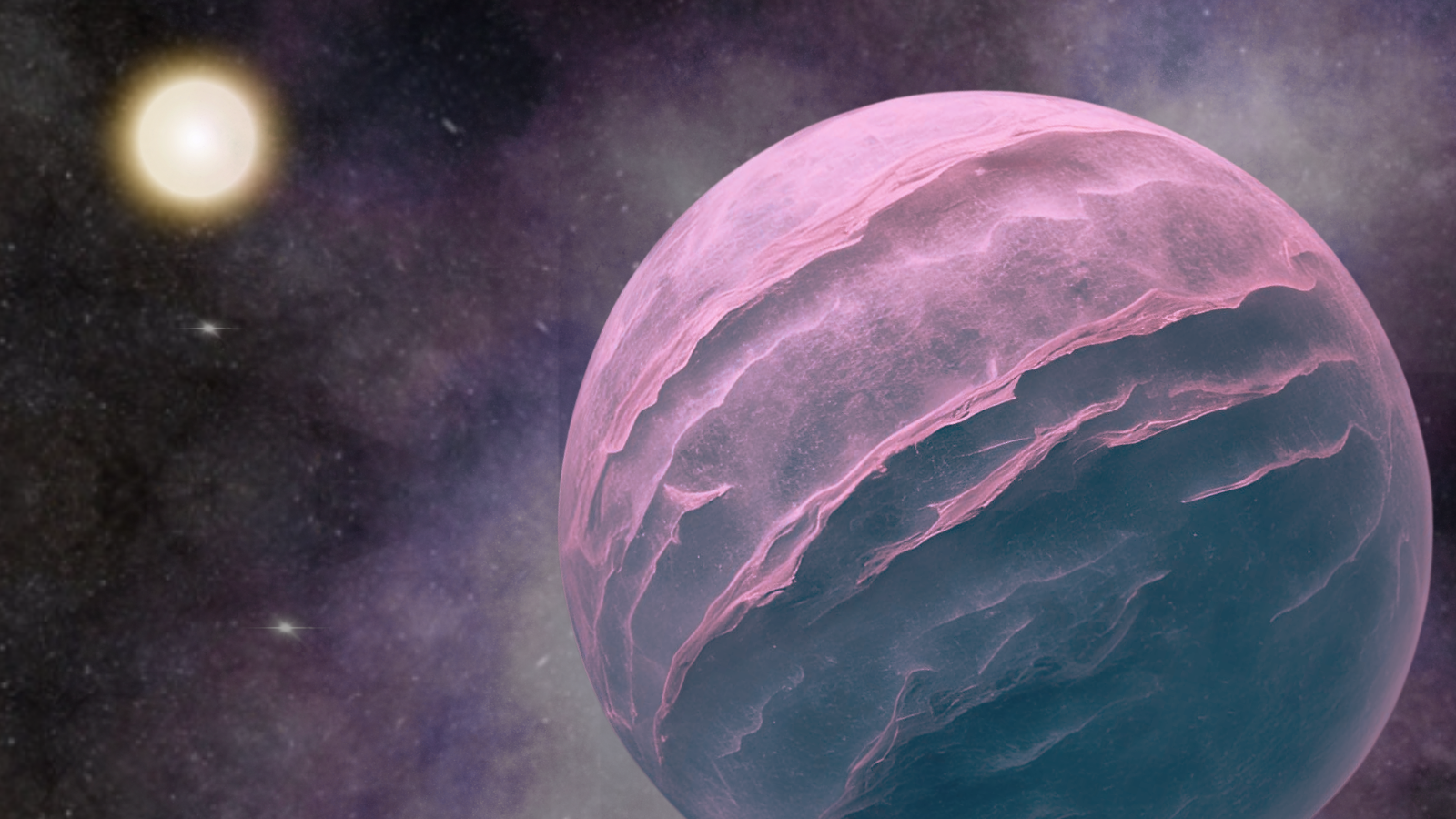
The 'Pink Planet', officially known as 2M1207b, is a gas giant exoplanet located approximately 170 light-years from Earth. It is a fascinating celestial body, with its distinctive pink color being a result of its unique atmospheric properties. The planet is surrounded by a disk of dust and debris, which is thought to be the remains of a planetary formation process. The discovery of salt on the 'Pink Planet' raises more questions about the planet's origins and the possibility of water existing on its surface.Implications of the Discovery
The detection of salt on the 'Pink Planet' has significant implications for the field of astronomy. It suggests that the planet may have had a more complex geological history than previously thought, with the possibility of water existing on its surface in the past. This finding also raises questions about the potential for life on the planet, as salt is a key ingredient for many biological processes. The discovery of salt on the 'Pink Planet' is a reminder of the vast mysteries that still exist in our universe, and the importance of continued exploration and research.How the Discovery Was Made
The James Webb Space Telescope used its advanced infrared instruments to detect the salt on the 'Pink Planet'. The telescope's Near-Infrared Spectrograph (NIRSpec) and Mid-Infrared Instrument (MIRI) were used to analyze the planet's atmosphere and detect the presence of salt. The data was then processed and analyzed by a team of researchers, who confirmed the presence of salt on the planet's surface.- The James Webb Space Telescope is a space telescope that was launched by NASA in 2021.
- The telescope is designed to explore the universe in infrared light, providing a unique perspective on the cosmos.
- The 'Pink Planet' is a gas giant exoplanet located approximately 170 light-years from Earth.
- The discovery of salt on the 'Pink Planet' was made using the telescope's NIRSpec and MIRI instruments.
- The finding has significant implications for the field of astronomy, suggesting that the planet may have had a more complex geological history than previously thought.
Conclusion
The discovery of salt on the 'Pink Planet' is a groundbreaking finding that has the potential to revolutionize our understanding of the universe. The James Webb Space Telescope has once again proven itself to be a powerful tool for exploration and discovery, and its continued operation is expected to reveal many more secrets of the cosmos. As researchers continue to analyze the data and understand the implications of this finding, we can expect to learn more about the 'Pink Planet' and its place in the universe.Stay tuned to Buzztoday24 for more updates.





0 Comments