

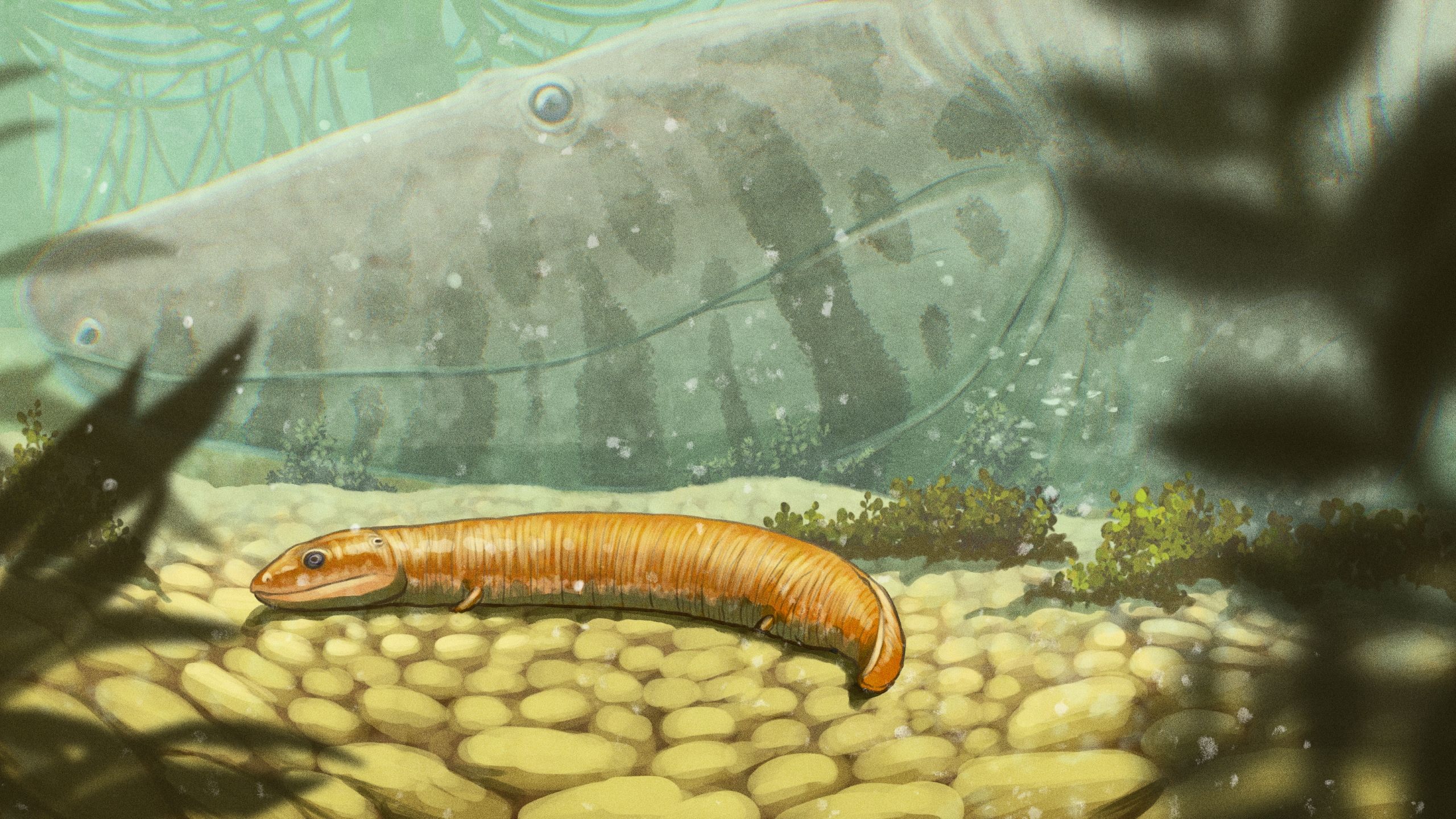
A New Perspective on Ancient Vertebrate Land Dwellers
The discovery of rare fossils near Chicago has shed new light on the evolution of the first vertebrate land dwellers. According to a recent study, these ancient four-legged creatures did not follow the traditional amphibian-like life cycle that was previously thought. The findings have significant implications for our understanding of evolutionary biology and the history of life on land. Challenging the Traditional View For a long time, scientists believed that the first vertebrates to venture onto land were similar to modern-day amphibians, such as frogs and toads. These animals undergo a process called metamorphosis, where they transform from aquatic larvae to air-breathing adults. However, the new study suggests that this was not the case for the earliest vertebrate land dwellers. The researchers analyzed fossils of ancient tetrapods, or four-legged vertebrates, that lived around 300 million years ago during the Carboniferous period. These fossils were found in rocks near Chicago and provided valuable insights into the lives of these early land dwellers. The study revealed that these ancient creatures did not have an amphibian-like life cycle, but instead, they likely hatched from eggs and developed directly into adults.The Significance of the Discovery
The findings of this study have important implications for our understanding of the evolution of vertebrates on land. The discovery of these fossils and the analysis of their characteristics have allowed researchers to reconstruct the lives of these ancient creatures and gain a better understanding of how they adapted to their environment.- The fossils found near Chicago are some of the oldest known examples of vertebrate land dwellers.
- The study suggests that these ancient creatures did not undergo metamorphosis, but instead developed directly into adults.
- The findings challenge the traditional view of the evolution of vertebrates on land and provide new insights into the history of life on Earth.
- The research has significant implications for the field of evolutionary biology and our understanding of the diversity of life on our planet.
Conclusion
The discovery of 300 million-year-old fossils near Chicago has revealed a new story about the first vertebrate land dwellers. The study suggests that these ancient creatures did not have an amphibian-like life cycle, but instead developed directly into adults. The findings have significant implications for our understanding of evolutionary biology and the history of life on land. As researchers continue to uncover the secrets of the past, we may yet discover even more surprising facts about the evolution of life on our planet.Stay tuned to Buzztoday24 for more updates.





0 Comments