
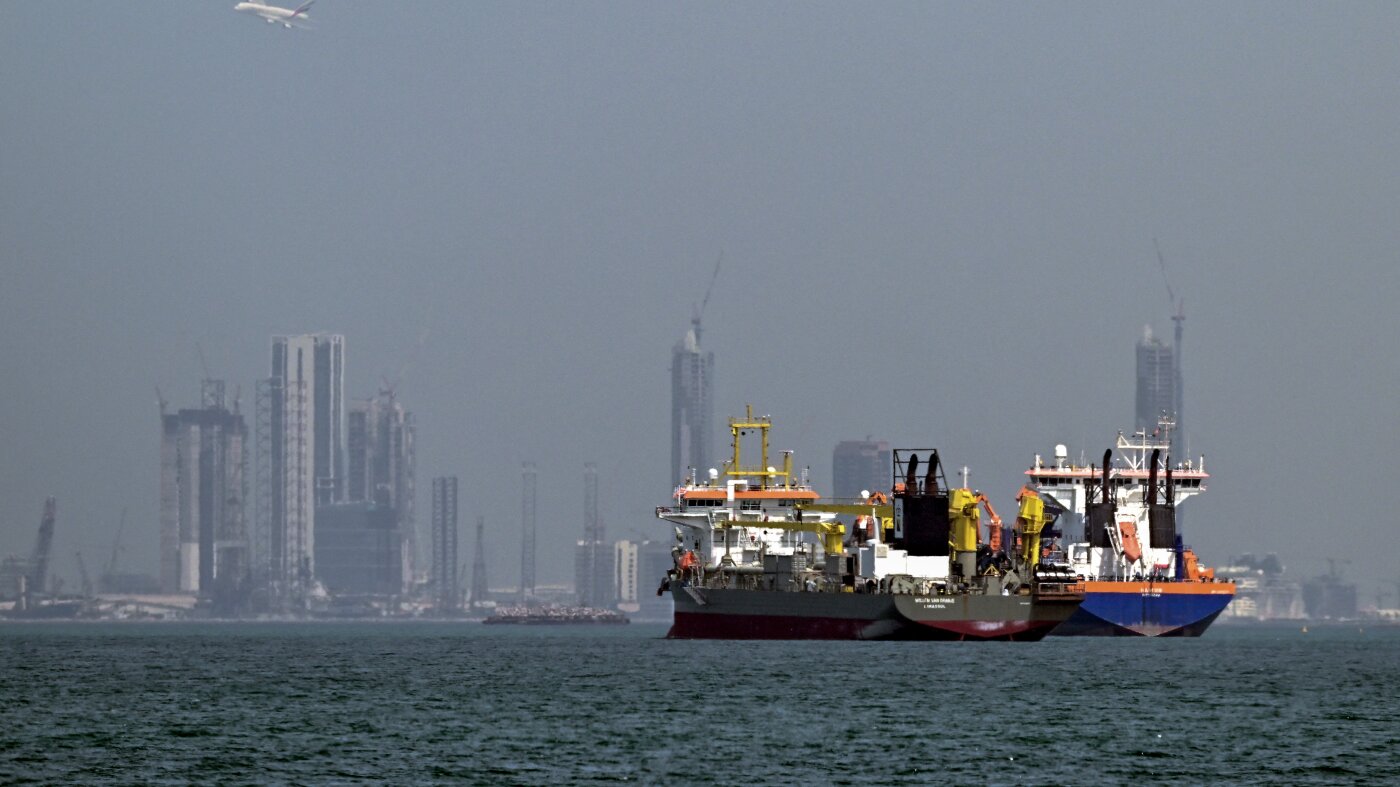
The United States has undertaken a bold military operation against Iranian mine-laying vessels in the vicinity of the Strait of Hormuz, a strategic waterway that connects the Persian Gulf to the Arabian Sea. This move is seen as a significant escalation in the ongoing tensions between the U.S. and Iran, which have been simmering for months. The strike is believed to be a response to Iran's alleged involvement in the mining of U.S. and allied ships in the region.
Background to the Conflict
The conflict between the U.S. and Iran has its roots in a complex web of historical, political, and economic factors. The two nations have been at loggerheads since the 1979 Iranian Revolution, which saw the overthrow of the U.S.-backed Shah of Iran. Since then, the relationship between the two countries has been marked by periods of tension and hostility, including the 1980-88 Iran-Iraq War, which was sparked by Iraq's invasion of Iran.
Recent Developments
In recent months, tensions between the U.S. and Iran have escalated significantly, with the two nations engaging in a series of attacks and counterattacks. In May, four oil tankers were damaged in the Gulf of Oman, near the Strait of Hormuz, in an incident that was blamed on Iran. The U.S. responded by deploying additional military assets to the region, including an aircraft carrier strike group and a bomber task force.
In June, Iran shot down a U.S. surveillance drone, which it claimed had entered its airspace. The U.S. military responded with a targeted strike against Iranian air defense systems, but President Donald Trump called off the operation at the last minute. The incident marked a significant escalation in the conflict, with both sides accusing each other of aggression.
Attacks in the Gulf
On Wednesday, two cargo ships were struck in the Gulf of Oman, near the Strait of Hormuz. The attacks were blamed on Iran, which denied any involvement. The incidents have raised concerns about the safety of shipping in the region, with the U.S. and its allies accusing Iran of attempting to disrupt global oil supplies.
The attacks on the cargo ships have also sparked fears of a broader conflict in the region, with the U.S. and its allies vowing to take action to protect their interests. The U.S. has accused Iran of engaging in "provocative" and "destructive" behavior, and has called on the international community to condemn its actions.
Lawmakers Seek Answers
As the conflict in the Middle East continues to escalate, lawmakers in Washington are pressing for answers on the war's rationale. Many have questioned the justification for the U.S. military's involvement in the region, and have called for a more transparent and accountable approach to decision-making.
Some lawmakers have also expressed concerns about the potential consequences of a broader conflict in the Middle East, including the risk of civilian casualties and the impact on global oil prices. The U.S. has a significant military presence in the region, with bases in countries such as Saudi Arabia, Qatar, and the United Arab Emirates.
International Reaction
The international community has reacted with concern to the escalating tensions in the Middle East. The United Nations has called for restraint and diplomacy, while the European Union has urged all parties to avoid any actions that could lead to further destabilization in the region.
China and Russia, which have significant economic and strategic interests in the Middle East, have also weighed in on the conflict. China has called for calm and restraint, while Russia has accused the U.S. of "provoking" Iran and destabilizing the region.
Global Security Implications
The conflict in the Middle East has significant implications for global security, with the potential to disrupt oil supplies and spark a broader conflict. The Strait of Hormuz is a critical waterway, with a significant proportion of the world's oil passing through it.
The U.S. and its allies have a significant military presence in the region, which has raised concerns about the potential for miscalculation and unintended consequences. The conflict has also sparked fears of a broader sectarian conflict in the Middle East, with Sunni and Shia Muslims on opposite sides of the divide.
Naval Operations
The U.S. has a significant naval presence in the Middle East, with a range of ships and aircraft deployed to the region. The U.S. Navy's Fifth Fleet is headquartered in Bahrain, and is responsible for maritime operations in the region.
The U.S. has also deployed a range of other naval assets to the region, including submarines, destroyers, and mine countermeasures ships. The U.S. Navy has a long history of operations in the Middle East, dating back to the 1980s, when it was involved in a series of skirmishes with Iranian naval forces.
Iran's Naval Capabilities
Iran has a significant naval presence in the Middle East, with a range of ships and aircraft deployed to the region. The Iranian Navy is headquartered in Bandar Abbas, and is responsible for maritime operations in the Persian Gulf and the Strait of Hormuz.
Iran has invested heavily in its naval capabilities in recent years, with a focus on asymmetric warfare and mine-laying operations. The Iranian Navy has a range of ships and submarines, including the Kilo-class submarine, which is capable of launching torpedoes and mines.
Conclusion
The conflict in the Middle East is a complex and multifaceted issue, with a range of historical, political, and economic factors at play. The U.S. and Iran are engaged in a series of attacks and counterattacks, with the potential for a broader conflict in the region.
The international community has called for restraint and diplomacy, but the situation remains highly volatile. The U.S. and its allies have a significant military presence in the region, and are committed to protecting their interests and ensuring the free flow of oil.
As the conflict continues to escalate, it is essential that all parties involved prioritize diplomacy and de-escalation. The consequences of a broader conflict in the Middle East would be catastrophic, with the potential to disrupt global oil supplies and spark a wider sectarian conflict.
The U.S. and Iran must work towards a peaceful resolution to the conflict, through a combination of diplomatic efforts and confidence-building measures. The international community must also play a role in promoting stability and security in the region, through a range of economic and diplomatic initiatives.
Follow Buzztoday24 for more updates.
Post a Comment