
 ->
->
The Universe Expansion Enigma: Unraveling the 'Hubble Tension' with Ripples in Spacetime
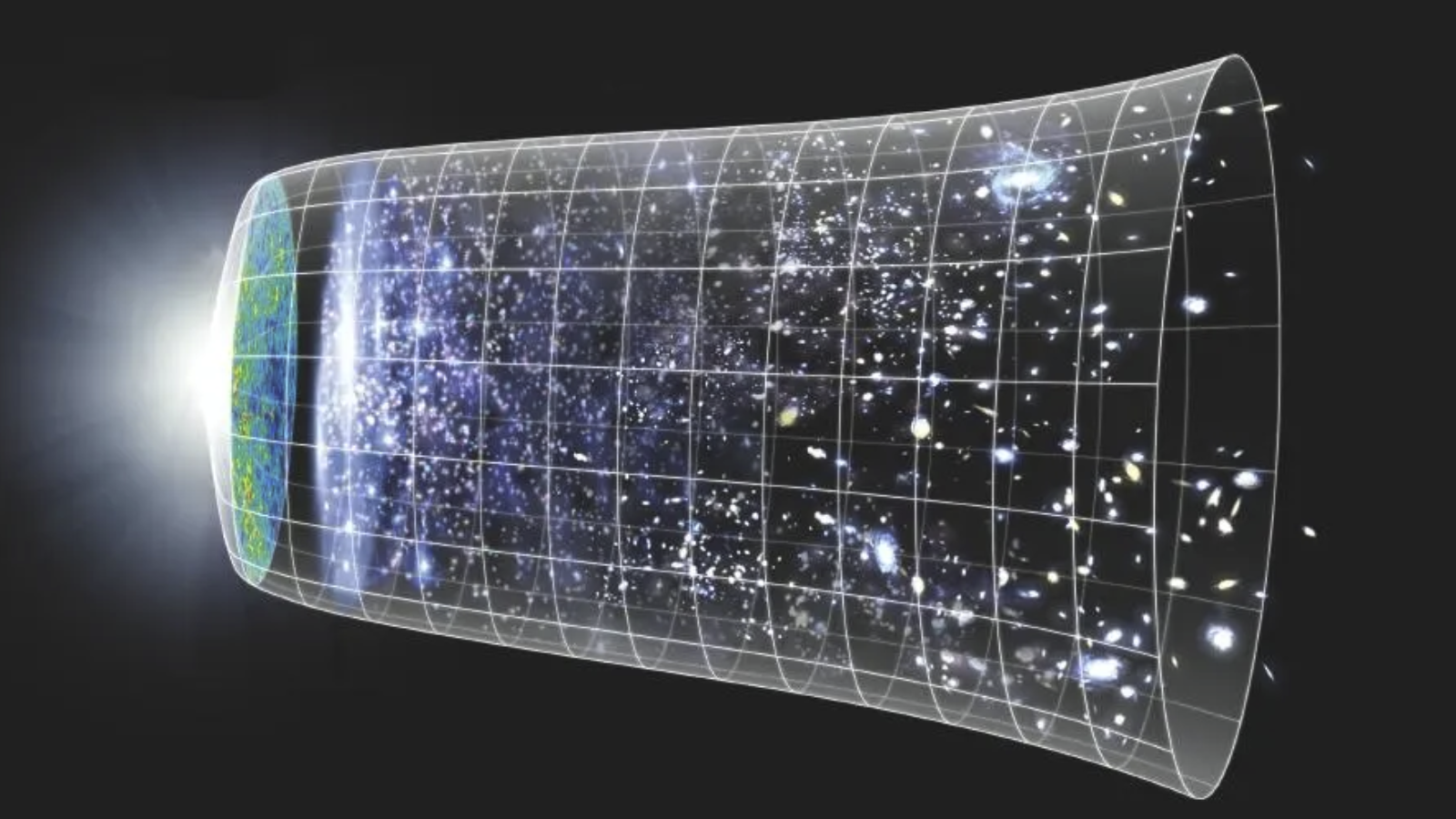
The universe has long been a subject of fascination for humans, with its vast expanse and mysteries waiting to be unraveled. One of the most pressing questions in cosmology today is the rate at which the universe is expanding. The 'Hubble tension' has been a topic of debate among scientists, with different methods yielding conflicting results. However, a new approach using ripples in spacetime, also known as gravitational waves, could finally provide the answer to this enigma.
What is the 'Hubble Tension'?
The 'Hubble tension' refers to the discrepancy between the measured values of the Hubble constant, which represents the rate at which the universe is expanding. The Hubble constant is named after Edwin Hubble, who first observed the expansion of the universe in the 1920s. There are two main methods used to measure the Hubble constant: one based on observations of the cosmic microwave background radiation (CMB) and the other based on observations of supernovae and other astronomical objects.
CMB-Based Measurements
The CMB-based method involves analyzing the small fluctuations in the temperature and polarization of the CMB, which is thought to be a remnant of the Big Bang. These fluctuations can provide valuable information about the composition and evolution of the universe. The CMB-based measurements suggest a Hubble constant value of approximately 67 kilometers per second per megaparsec (km/s/Mpc).
Supernovae-Based Measurements
The supernovae-based method, on the other hand, involves observing the light curves of supernovae, which are extremely bright explosions of stars. By analyzing these light curves, scientists can determine the distance to the supernovae and, subsequently, the expansion rate of the universe. The supernovae-based measurements suggest a Hubble constant value of approximately 74 km/s/Mpc.
The 'Hubble Tension' Problem
The discrepancy between the CMB-based and supernovae-based measurements has become known as the 'Hubble tension.' This tension is significant, as it challenges our understanding of the universe's expansion history and fundamental laws of physics. The 'Hubble tension' has sparked intense debate among scientists, with some arguing that it could be due to unknown systematic errors or new physics beyond the standard model of cosmology.
Ripples in Spacetime: A New Tool for Cosmology
Recently, scientists have proposed a new approach to measuring the Hubble constant using gravitational waves, which are ripples in spacetime produced by massive cosmic events such as black hole mergers. The Laser Interferometer Gravitational-Wave Observatory (LIGO) and Virgo Collaborations have already detected numerous gravitational wave signals, providing a new window into the universe. By analyzing these signals, scientists can infer the distance to the source and, subsequently, the expansion rate of the universe.
Gravitational Wave Cosmology
The use of gravitational waves as a cosmological probe is a relatively new field, but it has already shown great promise. Gravitational wave cosmology can provide independent measurements of the Hubble constant, potentially resolving the 'Hubble tension.' The advantage of gravitational wave cosmology lies in its ability to measure the expansion rate of the universe in a way that is complementary to traditional methods. By combining gravitational wave measurements with other astronomical observations, scientists can gain a more comprehensive understanding of the universe's evolution and composition.
A New Era for Cosmology
The use of ripples in spacetime to measure the universe's expansion rate marks a new era for cosmology. As scientists continue to develop and refine this approach, they may finally be able to resolve the 'Hubble tension' and gain a deeper understanding of the universe's fundamental laws. The discovery of gravitational waves has opened up new avenues for research, and the potential for breakthroughs in our understanding of the cosmos is vast. As one scientist noted, "It's not every day that you come up with an entirely new tool for cosmology." The universe expansion enigma is one step closer to being solved, and the world of cosmology is eagerly awaiting the next discovery.
In conclusion, the 'Hubble tension' remains one of the most pressing questions in cosmology today. However, the use of ripples in spacetime, or gravitational waves, offers a new and exciting approach to measuring the universe's expansion rate. As scientists continue to explore this new frontier, they may finally be able to unravel the mysteries of the universe's expansion and gain a deeper understanding of the cosmos. The universe expansion enigma is a complex and intriguing puzzle, but with the help of gravitational wave cosmology, scientists may finally be able to find the missing piece.
Share this news on Facebook, X (Twitter), and Yahoo Groups!
Stay with Buzztoday24 for instant updates.
Post a Comment