
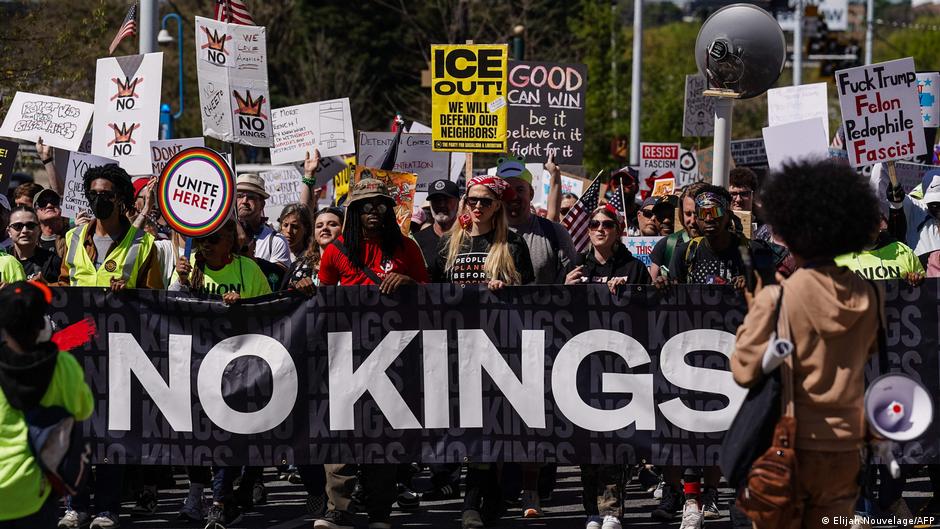
Introduction to the "No Kings" Protests
The United States has witnessed a wave of protests across its major cities, with thousands gathering under the banner of "No Kings" to express their discontent with the current state of democracy under the presidency of Donald Trump. The protests, which took place in cities such as New York, Los Angeles, Chicago, and Washington D.C., among others, are a manifestation of the growing concern among Americans about the erosion of democratic values and institutions in the country.
Allegations of Democracy Backsliding
At the heart of the protests is the accusation that the Trump administration is systematically undermining the foundations of American democracy. Critics point to a series of actions and policies implemented by the administration that they argue are aimed at consolidating power, suppressing dissent, and undermining the rule of law. These include attempts to manipulate electoral processes, interfere with the judiciary's independence, and restrict freedom of the press and assembly.
The protesters contend that such actions are not only undemocratic but also pose a significant threat to the stability and legitimacy of the US political system. They argue that the concentration of power in the executive branch, coupled with the erosion of checks and balances, is leading to a form of authoritarianism that is incompatible with the principles of democracy.
White House Response
In response to the protests, the White House has dismissed the marches as being orchestrated by "leftist funding networks." This characterization suggests that the administration views the protests not as a genuine expression of public concern but rather as a politically motivated attempt to undermine the president's agenda. By attributing the protests to external funding sources, the White House aims to delegitimize the movement and undermine its credibility.
However, organizers of the protests have vehemently denied these allegations, stating that the movement is grassroots and driven by ordinary citizens who are concerned about the future of democracy in America. They argue that the diversity of the protesters, ranging from students and workers to retirees and professionals, reflects the broad spectrum of society that is alarmed by the current state of affairs.
Democracy and Its Challenges
Democracy is often described as a system of government that is of the people, by the people, and for the people. It is founded on principles such as equality, justice, and freedom, with power vested in the people who exercise it through elected representatives. However, maintaining a healthy democracy requires more than just periodic elections; it demands a vibrant civil society, an independent judiciary, a free press, and robust institutions that can protect individual rights and prevent the abuse of power.
The challenges facing American democracy are multifaceted. On one hand, there are systemic issues such as voter suppression, gerrymandering, and the influence of money in politics, which can disenfranchise certain groups and undermine the fairness of the electoral process. On the other hand, there are also social and economic challenges, including rising inequality, declining trust in institutions, and the polarization of the political landscape, which can erode social cohesion and create an environment conducive to authoritarian populism.
The Role of Protests in Democracy
Protests and demonstrations are a fundamental component of democratic expression, allowing citizens to voice their opinions, challenge governmental policies, and bring about social change. The history of the United States is replete with examples of protests that have played a crucial role in shaping the country's political and social landscape, from the Civil Rights Movement to the anti-war movements of the 1960s and 1970s.
The "No Kings" protests are part of this tradition, with participants seeking to hold their government accountable and to protect the democratic principles that they believe are under threat. By taking to the streets, protesters are exercising their constitutional right to free speech and assembly, drawing attention to critical issues, and pushing for reforms that can strengthen democratic institutions and processes.
Global Perspectives on US Democracy
The state of democracy in the United States has significant implications not only for its citizens but also for the global community. As the world'sleading democracy, the US has historically been a beacon of freedom and a model for democratic governance. However, the current trends of democratic backsliding in the US are being watched with concern by international observers, who fear that the erosion of democracy in America could have far-reaching consequences for global stability and human rights.
Many countries look up to the US for leadership on democratic values and practices. If the US fails to uphold these standards, it could embolden authoritarian regimes around the world and undermine efforts to promote democracy and human rights internationally. Furthermore, the health of American democracy is closely linked to its ability to play a positive role in global affairs, from promoting peace and security to addressing global challenges such as climate change and pandemics.
Conclusion and Future Directions
The "No Kings" protests reflect a deeper crisis of democracy in the United States, one that requires a comprehensive and inclusive response. Addressing the challenges facing American democracy will necessitate a broad national conversation about the values and principles that underpin the political system, as well as concrete actions to strengthen institutions, enhance transparency and accountability, and ensure that the government truly represents the will of the people.
For the protesters, the immediate goal is to raise awareness about the threats to democracy and to build a movement that can pressure the government to adopt reforms. In the long term, their vision is of a more just, equitable, and democratic society, where every citizen has an equal voice and opportunity to thrive. Whether the "No Kings" movement succeeds in achieving its objectives will depend on its ability to sustain momentum, build coalitions, and translate protest into policy change.
As the US navigates this critical period in its democratic history, the world watches with bated breath. The outcome will not only determine the future of American democracy but also have profound implications for global democracy, human rights, and the rule of law. The "No Kings" protests are a reminder that democracy is not a static achievement but a dynamic process that requires constant vigilance, participation, and defense by its citizens.
Call to Action
As the "No Kings" protests demonstrate, the defense of democracy is a collective responsibility that requires the active engagement of all citizens. It is a call to action for everyone who believes in the importance of democratic values and institutions. By participating in the democratic process, demanding accountability from elected officials, and supporting organizations that work to strengthen democracy, individuals can contribute to safeguarding the future of democracy in America and around the world.
In conclusion, the "No Kings" protests are a significant moment in the ongoing struggle to protect and advance democracy in the United States. They symbolize the resilience of democratic spirit and the determination of citizens to ensure that their government remains of the people, by the people, and for the people. As the protesters march forward, their message of hope, freedom, and democracy resonates across the nation, inspiring a new generation of leaders and citizens to join the quest for a more perfect union.
Follow Buzztoday24 for more updates.
Post a Comment