
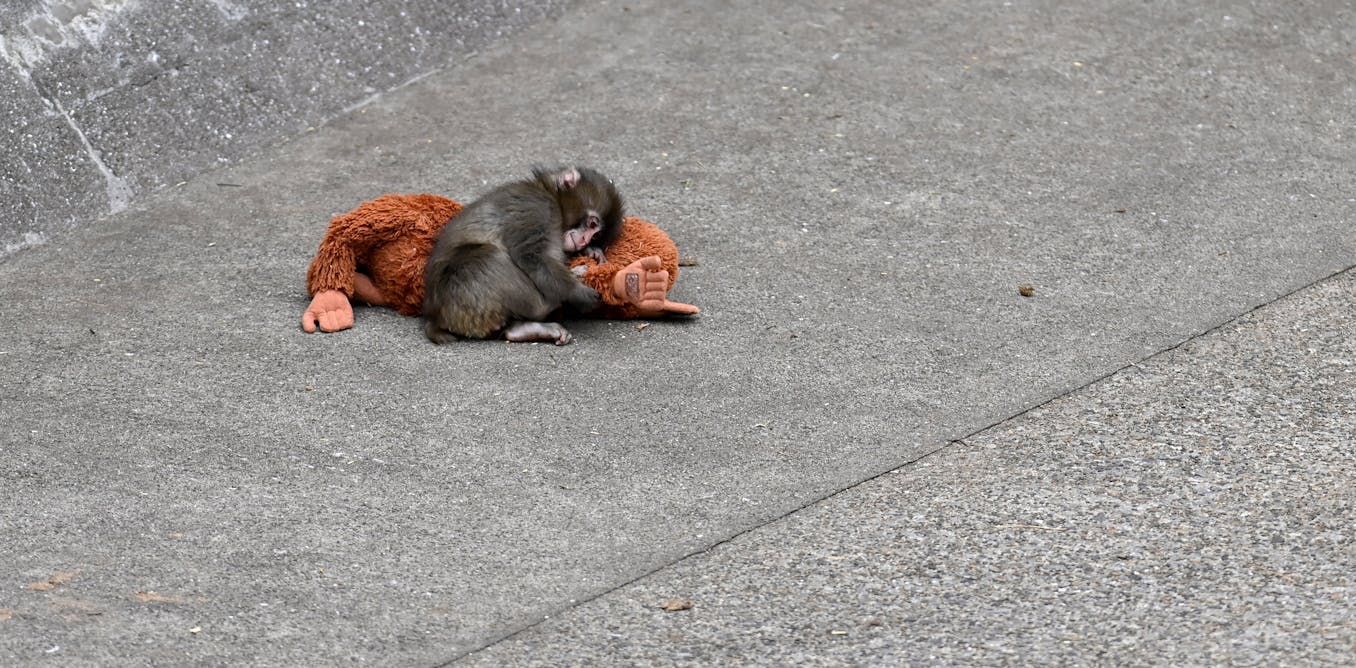
A heart-wrenching video of a monkey's attachment to his plushie has taken the internet by storm, but **attachment theory** suggests there's more to this adorable phenomenon than meets the eye. The story of Punch, the viral monkey, harks back to a set of famous 1950s psychology experiments that continue to influence our understanding of **child development** and **emotional attachment**.
The Experiment That Started It All
In the 1950s, psychologist Harry Harlow conducted a series of experiments on **primate behavior**, seeking to understand the nature of attachment and affection. His findings, which involved separating infant monkeys from their mothers and providing them with **plushie** substitutes, revealed the profound importance of physical touch and comfort in **social learning**.
- The monkeys in Harlow's experiment preferred the comfort of a **plushie** mother to a wire one, even when the wire mother provided food.
- This preference highlights the significance of **emotional attachment** and physical touch in development.
- The study's findings have been applied to **human development**, emphasizing the need for nurturing and affection in early childhood.
- **Attachment theory**, rooted in these experiments, explains how early relationships shape our expectations and behaviors in future interactions.
Punch's Story: A Modern Example
Punch's attachment to his plushie serves as a poignant reminder of the enduring power of **attachment theory**. As we watch him cling to his beloved toy, we're witnessing the same fundamental needs for comfort, security, and affection that Harlow's monkeys exhibited decades ago. This viral video not only tugs at our heartstrings but also offers a compelling illustration of **developmental psychology** in action.
In conclusion, the viral video of Punch and his plushie is more than just an endearing anomaly – it's a testament to the timeless relevance of **attachment theory** and the groundbreaking experiments that paved the way for our current understanding of **human development** and **primate behavior**.
Post a Comment