
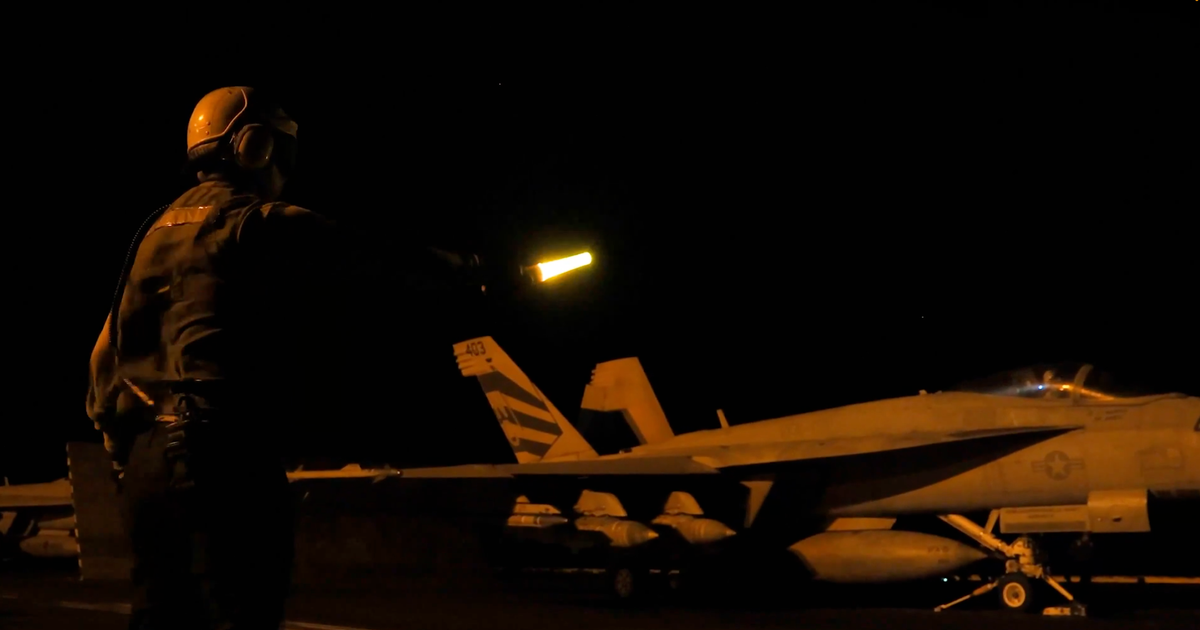
The United States and Iran have been engaged in a series of dueling attacks, with the U.S. wrapping up its third consecutive night of strikes against Iranian targets. The ongoing conflict has raised concerns about the stability of the region and the potential for further escalation. At the center of the dispute is the strategic Strait of Hormuz, a vital waterway that connects the Persian Gulf to the Arabian Sea and is a crucial conduit for international oil trade.
Background of the Conflict
The current tensions between the U.S. and Iran have been building for months, with both sides engaging in a war of words and periodic military exchanges. The conflict has its roots in the U.S. withdrawal from the Joint Comprehensive Plan of Action (JCPOA), also known as the Iran nuclear deal, which was negotiated during the Obama administration. The Trump administration's decision to reimpose sanctions on Iran has had a devastating impact on the country's economy, leading to widespread protests and unrest.
Strait of Hormuz: A Critical Waterway
The Strait of Hormuz is a narrow waterway that connects the Persian Gulf to the Arabian Sea, and it is a critical conduit for international oil trade. Approximately 20% of the world's oil passes through the strait, making it a vital artery for the global economy. The strait is also a key shipping route for other goods, including natural gas and commodities. The U.S. and its allies have long considered the strait to be a critical component of global trade, and they have worked to maintain its security and stability.
However, the strait is also a source of tension between the U.S. and Iran. Iran has long claimed that it has the right to control the strait, citing its geographical proximity and historical claims to the region. The U.S. and its allies have rejected these claims, arguing that the strait is an international waterway that is subject to the principles of freedom of navigation. The dispute has led to periodic confrontations between the U.S. and Iranian naval vessels, with both sides accusing each other of aggression and provocation.
Trump's Statement on the Strait of Hormuz
President Trump has vowed to maintain control of the Strait of Hormuz, stating that the U.S. will "probably run" the waterway. The statement has been seen as a provocative move, with many analysts interpreting it as a challenge to Iran's claims to the region. Trump's statement has also raised concerns about the potential for further escalation, with some warning that a miscalculation or accident could lead to a wider conflict.
The U.S. has a long history of involvement in the region, dating back to the 1980s when it provided military support to Iraq during its war with Iran. The U.S. has also maintained a significant military presence in the region, with bases in countries such as Bahrain and the United Arab Emirates. The U.S. has used these bases to launch military operations against Iranian targets, including the recent strikes against Iranian military installations.
Iran's Response to U.S. Strikes
Iran has responded to the U.S. strikes with a series of retaliatory attacks, including the launch of ballistic missiles against U.S. military bases in Iraq. The attacks have been seen as a significant escalation of the conflict, with many warning that they could lead to a wider war. Iran has also threatened to close the Strait of Hormuz, which would have a devastating impact on the global economy.
The international community has called for calm and restraint, with many countries urging the U.S. and Iran to engage in diplomatic talks to resolve their differences. The United Nations has also issued a statement calling for an end to the violence and a return to diplomatic negotiations. However, the prospects for a peaceful resolution to the conflict appear slim, with both sides dug in and refusing to back down.
Regional Implications of the Conflict
The conflict between the U.S. and Iran has significant implications for the region, with many countries caught in the middle. The conflict has already had a devastating impact on the Iraqi economy, with the country's oil exports disrupted by the fighting. The conflict has also raised concerns about the stability of other countries in the region, including Saudi Arabia and the United Arab Emirates.
The conflict has also had a significant impact on the global economy, with oil prices soaring in response to the fighting. The price of Brent crude oil has risen by over 10% in recent days, with many analysts warning that it could rise further if the conflict escalates. The conflict has also had a significant impact on the stock market, with many investors fleeing to safe-haven assets such as gold and bonds.
International Community's ResponseThe international community has responded to the conflict with a mix of concern and alarm. Many countries have called for calm and restraint, with some urging the U.S. and Iran to engage in diplomatic talks to resolve their differences. The European Union has issued a statement calling for an end to the violence and a return to diplomatic negotiations. China and Russia have also issued statements calling for calm and restraint, with both countries warning that the conflict could have significant implications for the global economy.
The United Nations has also played a key role in responding to the conflict, with the Security Council holding an emergency meeting to discuss the situation. The meeting was convened at the request of the U.S., which has accused Iran of violating international law by launching ballistic missiles against its military bases in Iraq. The meeting ended without a resolution, with many countries calling for further diplomatic efforts to resolve the conflict.
Conclusion
The conflict between the U.S. and Iran is a complex and multifaceted issue, with significant implications for the region and the global economy. The dispute over the Strait of Hormuz is a critical component of the conflict, with both sides refusing to back down. The international community has called for calm and restraint, with many countries urging the U.S. and Iran to engage in diplomatic talks to resolve their differences. However, the prospects for a peaceful resolution to the conflict appear slim, with both sides dug in and refusing to back down.
As the conflict continues to escalate, it is clear that the situation in the region will remain volatile and unpredictable. The U.S. and Iran must work to find a peaceful resolution to their differences, one that takes into account the interests and concerns of all parties involved. The international community must also play a key role in promoting diplomacy and restraint, working to prevent a wider conflict that could have devastating implications for the global economy and stability.
The situation in the Strait of Hormuz will continue to be a critical component of the conflict, with both sides refusing to back down. The U.S. has vowed to maintain control of the waterway, while Iran has threatened to close it. The international community must work to find a peaceful resolution to the dispute, one that takes into account the interests and concerns of all parties involved. The consequences of failure could be catastrophic, with the potential for a wider conflict that could have devastating implications for the global economy and stability.
As the world watches the situation in the Middle East with bated breath, it is clear that the conflict between the U.S. and Iran is a complex and multifaceted issue. The dispute over the Strait of Hormuz is a critical component of the conflict, with both sides refusing to back down. The international community must work to find a peaceful resolution to the dispute, one that takes into account the interests and concerns of all parties involved. The consequences of failure could be catastrophic, and it is up to the international community to prevent a wider conflict that could have devastating implications for the global economy and stability.
Follow Buzztoday24 for more updates.
إرسال تعليق