
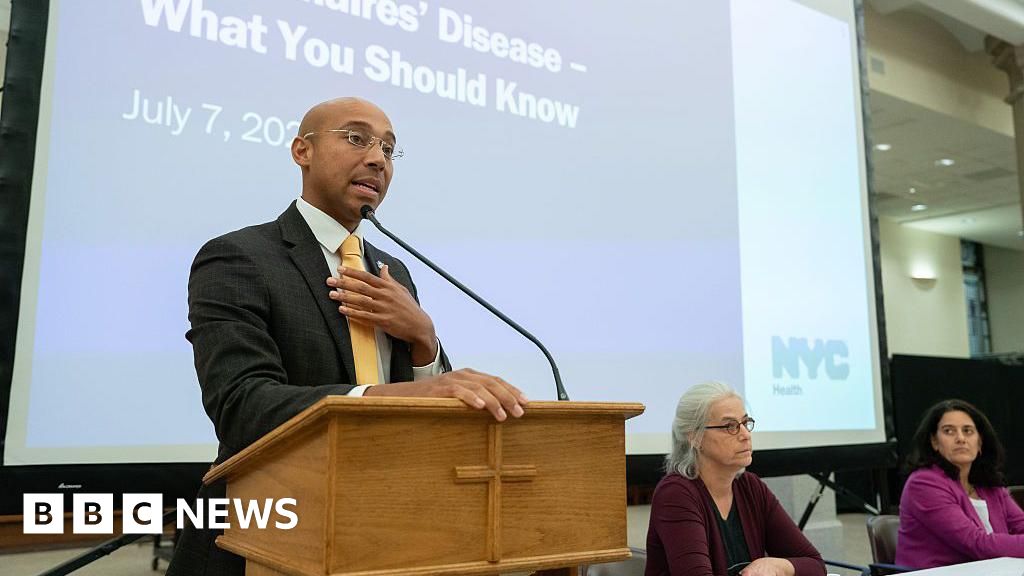
The city of New York is facing a serious public health concern as a Legionnaires' outbreak has been reported on the Upper East side. According to recent reports, 46 people have been infected with the disease, which is caused by breathing in mist from bacteria-filled water coolers. The outbreak has prompted officials to rush to test water towers in the area to identify the source of the contamination and prevent further spread of the disease.
What is Legionnaires' Disease?
Legionnaires' disease is a type of bacterial infection that is caused by the Legionella bacterium. It is typically spread through contaminated water systems, such as cooling towers, hot tubs, and large air conditioning systems. People can become infected by breathing in mist or vapor that contains the bacteria. The disease can cause a range of symptoms, including fever, chills, cough, and shortness of breath. In severe cases, it can lead to pneumonia and even death.
Symptoms and Diagnosis
The symptoms of Legionnaires' disease can be similar to those of other respiratory infections, making it difficult to diagnose. However, if you are experiencing any of the following symptoms, it is essential to seek medical attention immediately: fever, chills, cough, shortness of breath, chest pain, and headache. A diagnosis of Legionnaires' disease is typically made through a combination of physical examination, laboratory tests, and imaging studies, such as chest X-rays.
In the current outbreak in New York, officials have reported that the majority of cases have been mild, with most patients recovering on their own. However, some patients have required hospitalization, and there have been reports of severe cases. The city's health department has urged anyone who is experiencing symptoms to seek medical attention immediately, as prompt treatment can help prevent complications and reduce the risk of transmission to others.
Investigation and Response
The New York City Department of Health and Mental Hygiene (DOHMH) has launched an investigation into the outbreak, working closely with other city agencies and state and federal partners. The investigation has focused on identifying the source of the contamination and taking steps to prevent further spread of the disease. Officials have tested water samples from cooling towers and other potential sources of contamination, and have taken steps to disinfect and clean the systems.
In addition to testing and disinfection, the city has also taken steps to educate the public about the risks of Legionnaires' disease and the importance of taking precautions to prevent transmission. This includes providing information on how to identify and report potential sources of contamination, as well as guidance on how to prevent the spread of the disease in the home and workplace.
Prevention and Control
Preventing the spread of Legionnaires' disease requires a multi-faceted approach that involves both individual and community-level actions. Individuals can take steps to reduce their risk of infection by avoiding exposure to contaminated water systems, such as avoiding hot tubs and swimming pools that are not properly maintained. They can also take steps to prevent the growth of Legionella bacteria in their homes, such as regularly cleaning and disinfecting showerheads and faucets.
At the community level, preventing the spread of Legionnaires' disease requires a coordinated effort to identify and address potential sources of contamination. This includes regular testing and maintenance of water systems, as well as prompt reporting of any suspected cases of the disease. By working together, individuals and communities can help prevent the spread of Legionnaires' disease and reduce the risk of outbreaks.
Previous Outbreaks and Lessons Learned
The current outbreak in New York is not the first time that the city has faced a Legionnaires' disease outbreak. In 2015, a major outbreak occurred in the Bronx, resulting in 138 cases and 16 deaths. The outbreak was linked to a contaminated cooling tower at a hospital, and it highlighted the need for improved regulations and oversight of water systems.
In response to the 2015 outbreak, the city implemented new regulations requiring building owners to regularly test and maintain their cooling towers. The regulations also required building owners to report any positive test results to the health department, and to take prompt action to disinfect and clean the systems. These regulations have helped to reduce the risk of Legionnaires' disease in the city, but the current outbreak highlights the need for continued vigilance and action.
National and International Response
The outbreak in New York has also drawn attention to the need for a national and international response to Legionnaires' disease. The disease is a global health concern, with outbreaks reported in countries around the world. In the United States, the Centers for Disease Control and Prevention (CDC) has reported that the number of cases of Legionnaires' disease has increased in recent years, with over 6,000 cases reported in 2018.
In response to the growing concern about Legionnaires' disease, the CDC has launched a number of initiatives aimed at preventing and controlling the spread of the disease. These initiatives include providing guidance and resources to healthcare providers, as well as working with state and local health departments to improve surveillance and reporting of cases. The CDC has also launched a national outbreak detection system, which uses data from laboratories and healthcare providers to quickly identify and respond to outbreaks.
Conclusion
The current outbreak of Legionnaires' disease in New York highlights the need for continued vigilance and action to prevent the spread of this serious public health concern. By working together, individuals and communities can help reduce the risk of infection and prevent outbreaks. This includes taking steps to identify and address potential sources of contamination, as well as following proper protocols for testing, maintenance, and disinfection of water systems.
As the investigation into the current outbreak continues, it is essential that officials and the public remain vigilant and take all necessary steps to prevent further spread of the disease. This includes following the guidance and recommendations of public health officials, as well as taking individual and community-level actions to reduce the risk of infection. By working together, we can help prevent the spread of Legionnaires' disease and keep our communities safe and healthy.
The city's health department has urged anyone who is experiencing symptoms to seek medical attention immediately, as prompt treatment can help prevent complications and reduce the risk of transmission to others. The department has also provided guidance on how to prevent the spread of the disease in the home and workplace, and has launched a number of initiatives aimed at educating the public about the risks of Legionnaires' disease.
In addition to the city's efforts, the state and federal governments have also launched initiatives aimed at preventing and controlling the spread of Legionnaires' disease. These initiatives include providing funding and resources to support outbreak detection and response, as well as launching public awareness campaigns to educate people about the risks of the disease.
As the situation continues to unfold, it is essential that we remain vigilant and take all necessary steps to prevent the spread of Legionnaires' disease. This includes following the guidance and recommendations of public health officials, as well as taking individual and community-level actions to reduce the risk of infection. By working together, we can help prevent the spread of this serious public health concern and keep our communities safe and healthy.
Final Thoughts
The outbreak of Legionnaires' disease in New York is a serious public health concern that requires immediate attention and action. By working together, we can help prevent the spread of this disease and reduce the risk of infection. It is essential that we remain vigilant and take all necessary steps to prevent the spread of Legionnaires' disease, and that we follow the guidance and recommendations of public health officials. Together, we can help keep our communities safe and healthy, and prevent the spread of this serious disease.
Follow Buzztoday24 for more updates.
Post a Comment