
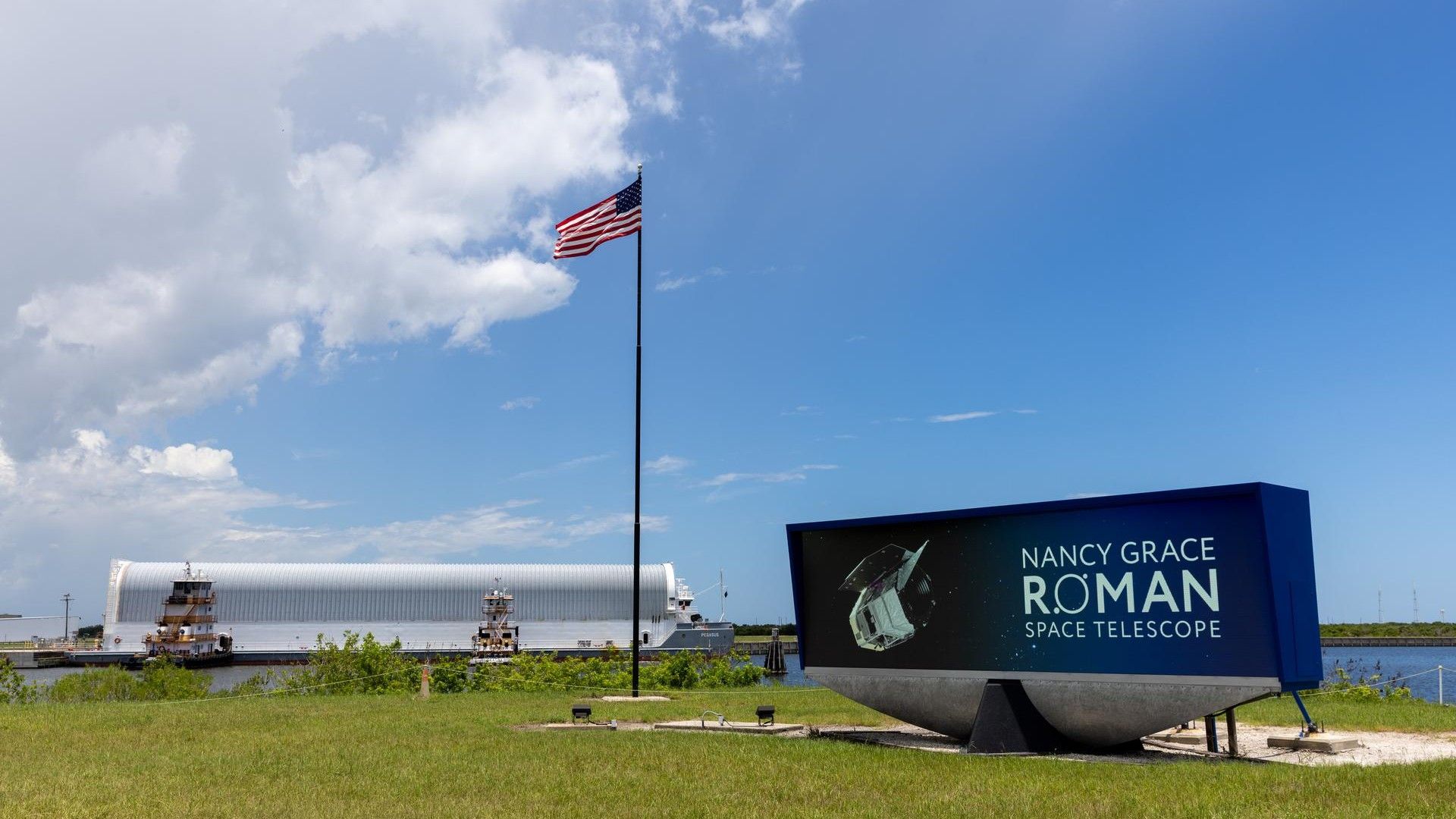
NASA's Roman Space Telescope: The Next Greatest Telescope
The highly anticipated Roman Space Telescope has finally arrived at the Kennedy Space Center in Florida, marking a major milestone in its journey to launch on a SpaceX Falcon Heavy rocket this summer. This state-of-the-art telescope is expected to revolutionize our understanding of the universe, and its arrival in Florida brings it one step closer to beginning its mission.The Roman Space Telescope is designed to study the universe in unprecedented detail, focusing on dark energy, exoplanets, and galaxy evolution. With its advanced technology and capabilities, it is set to become one of the most powerful telescopes in the world, surpassing even the Hubble Space Telescope in many areas. The telescope's primary mirror is 2.4 meters in diameter, allowing it to capture high-resolution images of the universe in infrared light.
Launch Preparations Underway
With the telescope's arrival in Florida, the team can now begin the final preparations for launch. The SpaceX Falcon Heavy rocket, which will carry the telescope into space, is currently undergoing final checks and testing. The launch is scheduled to take place this summer, although an exact date has not been announced.The Roman Space Telescope will be launched into an orbit around the Sun-Earth Lagrange point 2 (L2), a gravitationally stable location about 1.5 million kilometers from Earth. From this position, the telescope will have a clear view of the universe, unaffected by the Earth's atmosphere and other sources of interference.
Key Features of the Roman Space Telescope
Some of the key features of the Roman Space Telescope include:- High-resolution imaging: The telescope's advanced camera will capture detailed images of the universe in infrared light.
- Wide-field observations: The telescope will be able to observe large areas of the sky at once, allowing it to survey the universe more efficiently.
- Advanced spectroscopy: The telescope will be equipped with a sophisticated spectrograph, which will allow it to analyze the light from distant objects in unprecedented detail.
- Orbit around L2: The telescope's orbit around the L2 point will provide a stable and thermally quiet environment, ideal for making precise observations.
The Roman Space Telescope is named after Nancy Roman, a renowned astronomer who played a key role in the development of the Hubble Space Telescope. Her legacy continues to inspire new generations of astronomers and scientists, and the Roman Space Telescope is a testament to her contributions to the field.
Conclusion
The arrival of the Roman Space Telescope in Florida marks an exciting milestone in the history of space exploration. With its advanced technology and capabilities, this telescope is poised to make groundbreaking discoveries about the universe, from the formation of galaxies to the properties of dark energy. As we await the launch of the Roman Space Telescope, we can't help but feel a sense of anticipation and excitement for the new discoveries that it will bring.Stay tuned to Buzztoday24 for more updates.
Post a Comment