Ancient Vertebrate Fossils Rewrite History of Land Dwellers
Discoveries of 300 million-year-old fossils near Chicago challenge traditional views on the evolution of vertebrate land dwellers, suggesting a different life cycle than previously thought.
Revolutionary Fossil Discoveries Near Chicago
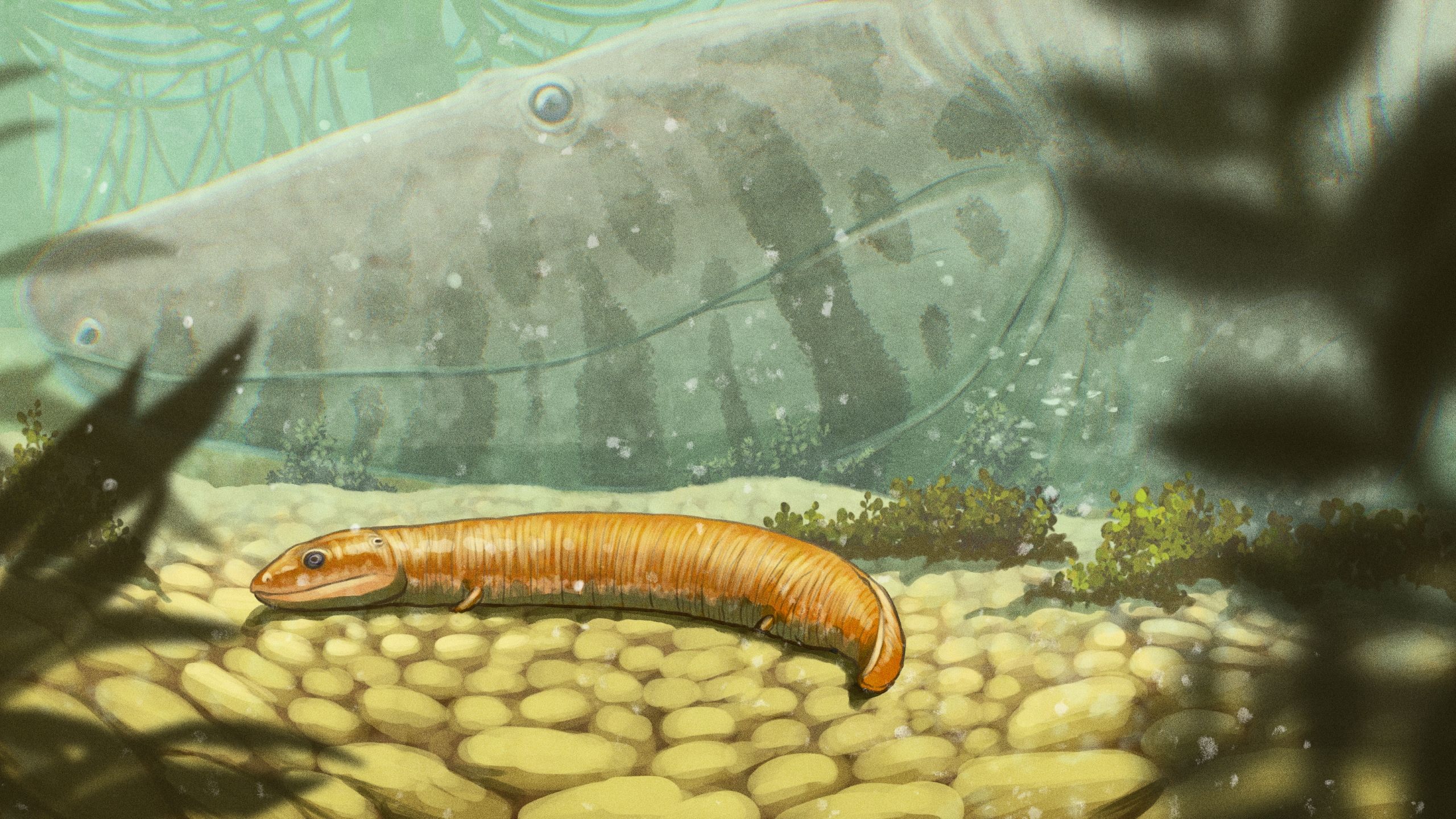
Researchers have made a groundbreaking discovery of 300 million-year-old fossils near Chicago, which challenges the traditional understanding of the first vertebrate land dwellers. According to a new study, these ancient creatures did not have an amphibian-like life cycle when they began walking on land, contrary to previous assumptions.
The fossils, which date back to the Carboniferous period, provide a unique glimpse into the early evolution of vertebrates on land.
The findings suggest that our ancient four-legged ancestors had a distinct life cycle that differed from modern amphibians, which undergo a transformation from aquatic to terrestrial environments.
The study, published in a recent scientific journal, sheds new light on the history of vertebrate evolution.
The researchers claim that the first vertebrate land dwellers did not follow the conventional path of aquatic-to-terrestrial evolution, but instead, exhibited a more complex and nuanced life cycle.
- The fossils discovered near Chicago are of rare, ancient vertebrates that lived during the Carboniferous period.
- These creatures are believed to have been among the first vertebrates to venture onto land.
- The fossil records show that these early vertebrates did not have an amphibian-like life cycle.
- Instead, they exhibited a unique life cycle that was adapted to their terrestrial environment.
- The study's findings challenge traditional views on the evolution of vertebrate land dwellers.
The discovery of these fossils has significant implications for our understanding of vertebrate evolution.
The research team suggests that the early vertebrates that lived on land were more diverse and complex than previously thought, with a wider range of adaptations to their environments.
The study's lead author notes that the findings "tell a completely different story" about the evolution of vertebrate land dwellers.
The traditional view of amphibian-like creatures transitioning from water to land is no longer supported by the fossil evidence.
The research team used advanced techniques to analyze the fossils and reconstruct the life cycle of these ancient creatures.
Their findings provide a new perspective on the history of vertebrate evolution, one that highlights the complexity and diversity of early vertebrate life on land.
In conclusion, the discovery of 300 million-year-old fossils near Chicago has revolutionized our understanding of the first vertebrate land dwellers.
The study's findings challenge traditional views on vertebrate evolution and provide a new perspective on the history of life on land. As researchers continue to explore and analyze these rare fossils, we can expect to learn more about the fascinating history of vertebrate evolution and the complex life cycles of our ancient ancestors.
Stay tuned to Buzztoday24 for more updates.

إرسال تعليق