
Uncovering the Secrets of Ancient Egyptian Burials
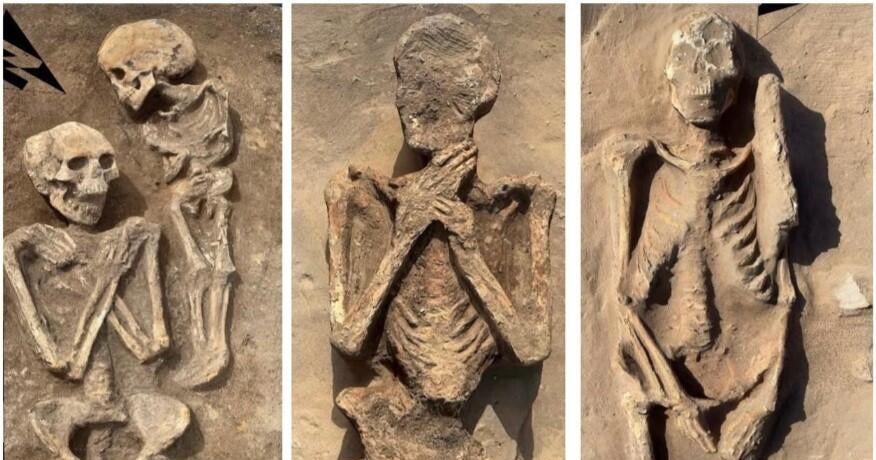
In a remarkable archaeological discovery, a team of researchers has unearthed ancient human and animal remains in Egypt's Nile Delta, shedding light on centuries of changing funerary practices and the evolution of a key site. The excavation, which took place in the Nile Delta region, has provided a unique glimpse into the lives and traditions of ancient Egyptians, with clues to the development of funerary practices over some 600 years. The Discovery The archaeological team, led by a renowned expert in Egyptian history, has been excavating the site for several years, carefully uncovering the remains of ancient humans and animals. The discovery includes a range of artifacts, from pottery and jewelry to coffins and other funerary objects. According to the researchers, the site has been in use for over 600 years, with different cultures and civilizations contributing to the evolution of funerary practices.The Evolution of Funerary Practices
The excavation has revealed a fascinating story of changing funerary practices, with different periods marked by distinct traditions and customs. During the earlier periods, burials were characterized by the use of simple coffins and minimal grave goods. However, as time passed, the burials became more elaborate, with the use of intricately decorated coffins and a wider range of grave goods. The researchers believe that this change reflects the growing wealth and prosperity of the ancient Egyptian society.- The earliest burials, dating back to around 1500 BCE, feature simple coffins and limited grave goods.
- During the New Kingdom period (around 1550-1070 BCE), burials become more elaborate, with the use of intricately decorated coffins and a wider range of grave goods.
- The Third Intermediate Period (around 1070-664 BCE) sees a decline in the use of elaborate coffins, with a return to simpler burial practices.
- The Late Period (around 664-332 BCE) is marked by a resurgence in elaborate burials, with the use of expensive grave goods and intricately decorated coffins.
The Significance of the Discovery
The discovery of these ancient human and animal remains has significant implications for our understanding of ancient Egyptian history and culture. The excavation provides a unique window into the lives and traditions of ancient Egyptians, revealing the evolution of funerary practices over centuries. According to the researchers, the site is one of the most important archaeological discoveries in recent years, offering a fascinating glimpse into the history and culture of ancient Egypt. Preserving the Site The archaeological team is working to preserve the site and its contents, ensuring that the discovery is protected for future generations. The excavation has been carefully documented, with detailed records and photographs taken of the site and its artifacts. The researchers are also working to conserve the artifacts, using specialized techniques to preserve the delicate materials.Conclusion
The discovery of ancient human and animal remains in Egypt's Nile Delta is a significant archaeological find, providing clues to centuries of changing funerary traditions and the evolution of a key site. The excavation offers a fascinating glimpse into the lives and traditions of ancient Egyptians, revealing the development of funerary practices over some 600 years. As the researchers continue to study the site and its contents, they are uncovering a rich and complex history that is redefining our understanding of ancient Egyptian culture and society.Stay tuned to Buzztoday24 for more updates.
Post a Comment