
Iran-Israel Conflict Reaches Boiling Point: Deadly Strikes Hit Lebanon Amid Power Struggle in Tehran
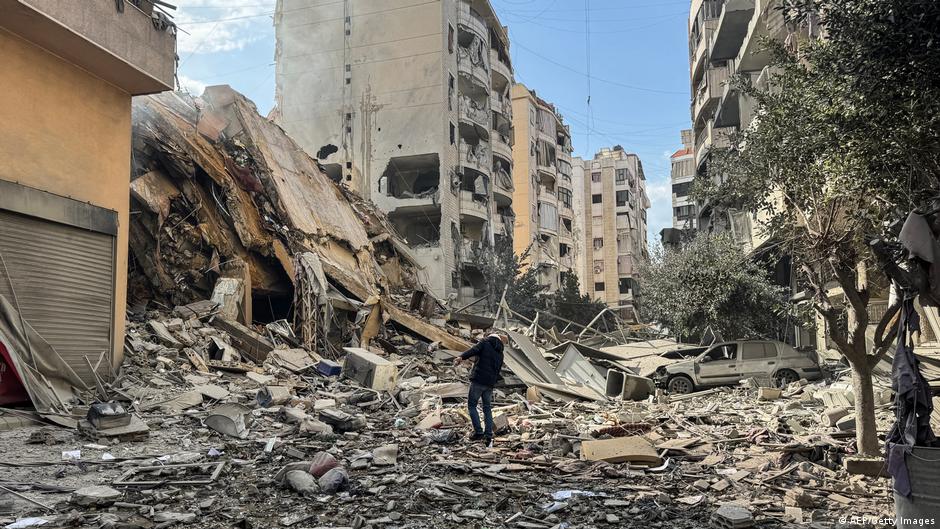
The Middle East is on high alert as the conflict between Iran and Israel continues to escalate. In a series of deadly strikes, Israel has targeted Hezbollah sites across Lebanon, including the capital city of Beirut. The attacks have sparked widespread condemnation and fears of an all-out war between the two arch-enemies. According to reports, the Israeli military has been targeting Hezbollah strongholds in Lebanon, citing the need to protect its citizens from the Shia militant group's aggression. However, the strikes have also resulted in significant collateral damage, with multiple civilians caught in the crossfire. The situation is further complicated by the power vacuum in Tehran, where Iran is struggling to elect a new supreme leader. The current supreme leader, Ali Khamenei, is rumored to be in poor health, and his eventual successor will play a crucial role in shaping the country's future. However, Israel has threatened to kill any successor to Khamenei, citing concerns over the country's nuclear program and its support for militant groups like Hezbollah. The threat has been seen as a clear escalation of tensions between the two countries, and has sparked fears of a wider conflict in the region. The conflict between Iran and Israel has been simmering for years, with both countries engaging in a series of proxy wars and clandestine operations. However, the recent escalation has raised concerns that the conflict could soon spill over into an all-out war. The Lebanese government has condemned the Israeli strikes, calling them a "clear violation of Lebanese sovereignty." The government has also urged the international community to intervene and put an end to the violence. Hezbollah, which is a key player in the Lebanese government, has vowed to retaliate against the Israeli strikes. The group's leader, Hassan Nasrallah, has promised to "respond appropriately" to the attacks, sparking fears of a wider conflict. The United States, which is a key ally of Israel, has urged restraint on both sides. However, the US has also made it clear that it will support Israel's right to defend itself against any threats from Hezbollah or other militant groups. As the situation continues to deteriorate, the international community is watching with bated breath. The conflict between Iran and Israel has the potential to draw in other countries and spark a wider regional war. The European Union has called for an emergency meeting to discuss the crisis, and the United Nations has urged both sides to exercise restraint. However, with tensions running high, it remains to be seen whether diplomacy can prevail. In the meantime, the people of Lebanon and Iran are bearing the brunt of the conflict. Civilians are being caught in the crossfire, and the humanitarian situation is rapidly deteriorating. The conflict between Iran and Israel is a complex and multifaceted issue, with deep-rooted historical and ideological differences. However, as the situation continues to escalate, it is clear that a peaceful resolution is needed to prevent further bloodshed and instability in the region.Background to the Conflict
The conflict between Iran and Israel is rooted in a complex web of historical, ideological, and strategic factors. The two countries have been sworn enemies since the 1979 Iranian Revolution, which saw the overthrow of the US-backed Shah and the establishment of an Islamic republic. Israel has long seen Iran as a threat to its existence, citing the country's nuclear program and its support for militant groups like Hezbollah. Iran, on the other hand, views Israel as a colonial power and a threat to its regional influence. The conflict has been fueled by a series of proxy wars and clandestine operations, with both countries supporting opposing sides in countries like Syria and Yemen. The situation has been further complicated by the involvement of other regional players, including the United States, Russia, and Turkey.Regional Implications
The conflict between Iran and Israel has significant implications for the region. A wider war could draw in other countries, including the United States, Russia, and Turkey. The conflict could also have a significant impact on global energy markets, with the Straits of Hormuz being a key chokepoint for oil exports. The humanitarian situation is also a major concern, with civilians caught in the crossfire and facing significant displacement and hardship. The conflict could also have a significant impact on the regional economy, with trade and investment likely to be severely disrupted.International Response
The international community has been watching the conflict with growing concern. The United States, which is a key ally of Israel, has urged restraint on both sides. However, the US has also made it clear that it will support Israel's right to defend itself against any threats from Hezbollah or other militant groups. The European Union has called for an emergency meeting to discuss the crisis, and the United Nations has urged both sides to exercise restraint. However, with tensions running high, it remains to be seen whether diplomacy can prevail. As the situation continues to deteriorate, it is clear that a peaceful resolution is needed to prevent further bloodshed and instability in the region. The international community must work together to find a solution to the conflict, and to prevent a wider war from breaking out.Conclusion
The conflict between Iran and Israel is a complex and multifaceted issue, with deep-rooted historical and ideological differences. The recent escalation of tensions has sparked fears of an all-out war, and the international community is watching with bated breath. As the situation continues to deteriorate, it is clear that a peaceful resolution is needed to prevent further bloodshed and instability in the region. The international community must work together to find a solution to the conflict, and to prevent a wider war from breaking out. The people of Lebanon and Iran are bearing the brunt of the conflict, and it is time for the international community to act. We must work together to find a peaceful solution to the conflict, and to prevent further suffering and instability in the region.Follow Buzztoday24 for latest updates.
Post a Comment